The RIYSE Fellowship is a 13-week immersive leadership experience designed to move Indigenous young people from learning and exploration to practical action and community impact. Through interactive workshops, conversations with Indigenous leaders and policymakers, collaborative learning, and hands-on project development, fellows gain the knowledge, skills, and relationships to advance climate resilience, environmental justice, and community-driven solutions.
The curriculum is organized into four interconnected phases, culminating in an in-person gathering in Washington, D.C.
Phase One: Grounding in Knowledge, Identity & Sovereignty
Weeks 1–3 | Building Our Foundations
Week 1: Foundations of Indigenous Climate Resilience
Explore climate change, environmental justice, Indigenous knowledge systems, traditional ecological practices, and the connections between environmental stewardship, cultural identity, and community well-being.
Week 2: From Community Priorities to Policy Solutions
Examine the foundations of public policy and community-driven problem-solving. Fellows identify an issue meaningful to them, explore potential solutions, and begin developing their individual project concepts and collective climate priorities.
Week 3: Indigenous Sovereignty & Tribal Governance
Explore Indigenous governance, sovereignty, treaty responsibilities, self-determination, and Indigenous-led approaches to environmental decision-making.
Individual Leadership Check-In #1: Vision & Foundations
Fellows meet one-on-one with RIYSE's program lead to discuss their leadership goals, refine their project concepts, and establish priorities for the remainder of the fellowship.
Phase Two: Understanding Systems & Pathways for Change
Weeks 4–6 | Navigating Policy and Governance
Week 4: Local & State Policy in Action
Examine how municipal and state governments influence environmental policy, community planning, natural resource management, and climate resilience. Fellows explore opportunities for community engagement and policy advocacy.
Week 5: Federal Policy, Advocacy & Accountability
Learn how Congress, federal agencies, and national policy institutions shape environmental decisions. Explore legislative processes, federal responsibilities, and opportunities to advocate for Indigenous community priorities.
Week 6: Global Indigenous Climate Leadership
Explore international climate policy, Indigenous rights frameworks, global environmental agreements, and the role of Indigenous peoples in advancing climate resilience across borders.
Individual Leadership Check-In #2: Strategy & Direction
Fellows review their project strategies, identify potential partners and policy pathways, discuss emerging challenges, and establish realistic next steps for implementation.
Phase Three: Developing Solutions & Mobilizing Support
Weeks 7–10 | Transforming Knowledge Into Action
Week 7: Building Community-Driven Initiatives
Develop practical skills in project planning, research, stakeholder engagement, goal-setting, and implementation. Fellows strengthen their individual proposals while contributing to the development of the collective climate declaration.
Week 8: Organizing, Coalition-Building & Collective Action
Explore community organizing, relationship-building, coalition development, and effective advocacy strategies. Fellows examine how collective action can influence policy and begin drafting their shared climate declaration.
Week 9: Strategic Communication & Media Advocacy
Strengthen public speaking, storytelling, strategic communication, and media engagement skills. Fellows learn how to communicate complex environmental and policy issues to diverse audiences while honoring Indigenous knowledge and community perspectives.
Individual Leadership Check-In #3: Progress & Preparation
Fellows receive individualized feedback on their emerging project proposals, presentation strategies, and communication approaches, identifying areas for refinement ahead of the Washington, D.C., gathering.
Week 10: Mobilizing Resources & Sustaining Impact
Explore funding strategies, project budgeting, partnerships, mentorship, and approaches to evaluating community impact.
Fellows identify potential resources and relationships that could support the long-term implementation of their projects.
Phase Four: Presenting, Advocating & Moving Forward
Weeks 11–13 | Bringing Our Work Into the World
Week 11: Advancing Our Projects & Collective Declaration
Fellows refine their individual project proposals through peer feedback and mentorship while completing the collective review and development of their Indigenous Youth Climate Declaration.
Week 12: Leadership in Practice: Preparing for Washington, D.C.
Prepare for the culminating gathering through project presentation rehearsals, mock stakeholder roundtables, congressional engagement preparation, and final review of the collective declaration.
Individual Leadership Check-In #4: Readiness & Next Steps
Fellows meet individually with RIYSE's program lead to finalize their presentations, discuss summit goals, and develop a personal action plan for continuing their work beyond the fellowship.
Week 13: RIYSE to Action: Indigenous Youth Climate Leadership Summit
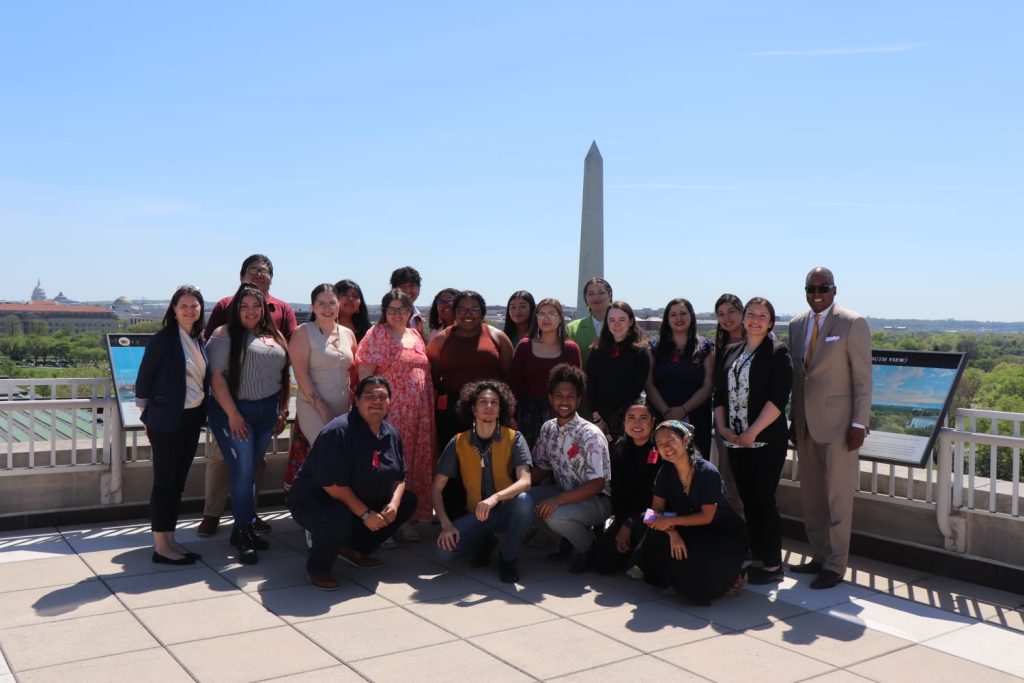
The fellowship culminates in an in-person gathering in Washington, D.C., where fellows connect their learning to real-world policy engagement, present their individual projects to potential supporters, and deliver their collective climate declaration to congressional offices on Capitol Hill.
The summit also provides opportunities for relationship-building, reflection, and exploring future pathways for collaboration and community impact.
Two Pathways. One Collective Future.
At RIYSE, learning is only the beginning. Throughout the 13-week fellowship, participants work toward two interconnected outcomes that transform knowledge into meaningful opportunities for community impact, collaboration, and advocacy.
Pathway One: Individual Leadership & Community-Driven Solutions
One Fellow. One Vision. A Pathway to Impact.
Each fellow develops an individual project addressing a climate resilience, environmental justice, or policy challenge meaningful to them and informed by their community's priorities. Through research, mentorship, collaborative feedback, and practical training, fellows transform their ideas into actionable proposals with clear goals, strategies, and opportunities for implementation.
The experience culminates at the RIYSE to Action: Indigenous Youth Climate Leadership Summit in Washington, D.C., where fellows present their projects to a roundtable of invited funders, business leaders, government officials, Tribal and community leaders, and nonprofit professionals.
These conversations create opportunities for mentorship, technical assistance, partnerships, and potential funding to help advance their initiatives beyond the fellowship. While financial support is not guaranteed, the roundtable is designed to connect promising ideas with individuals and organizations that may be able to support their development.
Pathway Two: Collective Leadership & Indigenous Youth Climate Advocacy
Many Voices. Shared Priorities. Collective Action.
Alongside their individual projects, fellows collaborate to develop The RIYSE Declaration on Indigenous Youth Climate Justice, a collective document reflecting their shared concerns, experiences, and recommendations for strengthening climate resilience and environmental protection.
Through facilitated dialogue, policy research, and consensus-building, fellows identify common priorities while honoring the diversity of Indigenous Nations, cultures, and perspectives represented within the cohort. The declaration reflects the collective perspectives of participating fellows rather than serving as an official position of the Indigenous Nations and communities they represent.
During the Washington, D.C., summit, fellows deliver their declaration to congressional offices on Capitol Hill, bringing their collective perspectives into national policy conversations and advocating for greater attention to the environmental challenges facing Indigenous youth and communities.
Personalized Leadership & Project Mentorship
Four Check-Ins. One Continuous Journey.
Throughout the fellowship, participants receive individualized guidance through four structured one-on-one check-ins with RIYSE's program lead during Weeks 3, 6, 9, and 12.
Each conversation provides dedicated time for fellows to reflect on their leadership development, strengthen their individual projects, navigate challenges, and prepare for the Washington, D.C., summit.
The four check-ins follow the progression of the fellowship:
Week 3: Vision & Foundations
Establish leadership goals, clarify project concepts, and identify intended community outcomes.
Week 6: Strategy & Direction
Strengthen project strategies, identify potential partners, and explore implementation pathways.
Week 9: Progress & Preparation
Review project development, refine proposals, and strengthen presentation and communication approaches.
Week 12: Readiness & Next Steps
Finalize summit preparations, establish individual engagement goals, and develop plans for continued action beyond the fellowship.
Together, these conversations ensure that every fellow receives consistent, personalized support while developing the confidence, skills, and relationships needed to advance their work.
From Learning to Lasting Impact
13 Weeks of Learning. Two Pathways to Action. A Network That Lasts Beyond the Fellowship.
The RIYSE Fellowship is designed to ensure that learning extends beyond the classroom and relationships continue beyond the final gathering. By connecting individual innovation with collective advocacy, fellows leave with more than new knowledge: they gain practical experience, meaningful relationships, and opportunities to advance solutions alongside their communities.
Whether through developing an individual initiative, contributing to shared policy priorities, or remaining engaged through RIYSE's growing alumni network, each fellow becomes part of a continuing effort to translate Indigenous youth leadership into meaningful, lasting change.