


For the past few months, we have been reaching out to California businesses to educate and convene the business community around the importance of making climate risk a prominent conversation for the next Insurance Commissioner in California. The response we heard was clear: when the line is drawn between the climate crisis and insurance, it comes down to an immediate balance-sheet liability; when coverage becomes unaffordable or unavailable, it cuts directly into hiring, inventory, and the operational survival of California’s businesses.
Climate risk is no longer just an environmental talking point; it is rapidly emerging as a direct hit to the bottom line capable of shutting down commercial enterprises. In California, the insurance marketplace is shifting faster than regulatory policy can adapt, leaving business owners to absorb mounting financial shocks with little to no structural protection.
According to recent survey data, 46% of small business owners report that skyrocketing coverage costs force them to operate underinsured. When severe weather strikes, a significant portion of these businesses cannot be made whole, turning localized physical damage into widespread commercial insolvency.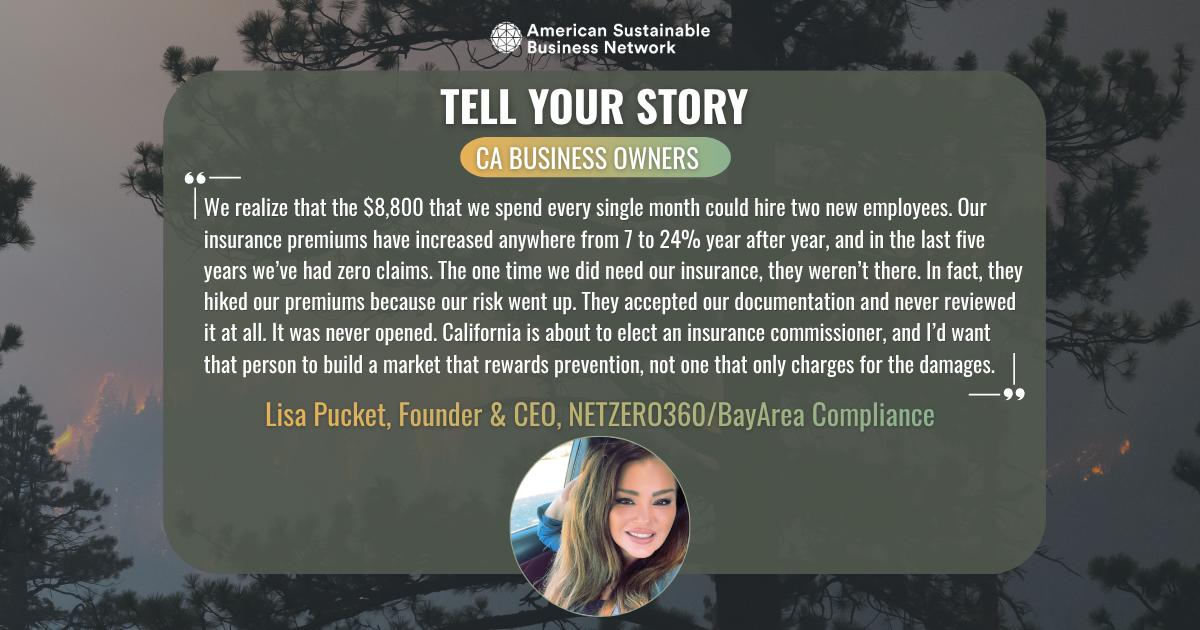
While insurance instability is a national concern, California is ground zero for the crisis. The 2025 Los Angeles wildfires alone caused an estimated $130 billion in damages, leaving a path of economic destabilization in their wake. As private insurers retreat, record numbers of policyholders are being forced into the California FAIR Plan (the state’s bare-bones insurer of last resort) while up to 1 in 5 homeowners now forgo coverage altogether, straining the stability of the local workforce.
 Businesses shoulder these same market headwinds with significantly fewer safeguards. Data from the Federal Reserve’s Small Business Credit Survey indicates that roughly 1 in 5 California small businesses experienced losses from natural disasters in the prior year. Unlike residential policyholders, commercial entities deal with:
- Fewer statutory caps on rate increases
- Far weaker cancellation and non-renewal protections
- More aggressive exclusions for climate perils
When commercial insurance becomes inaccessible, the downstream consequences trigger a domino effect: stalling commercial mortgages, dampening job creation, delaying housing developments, and eroding municipal tax bases.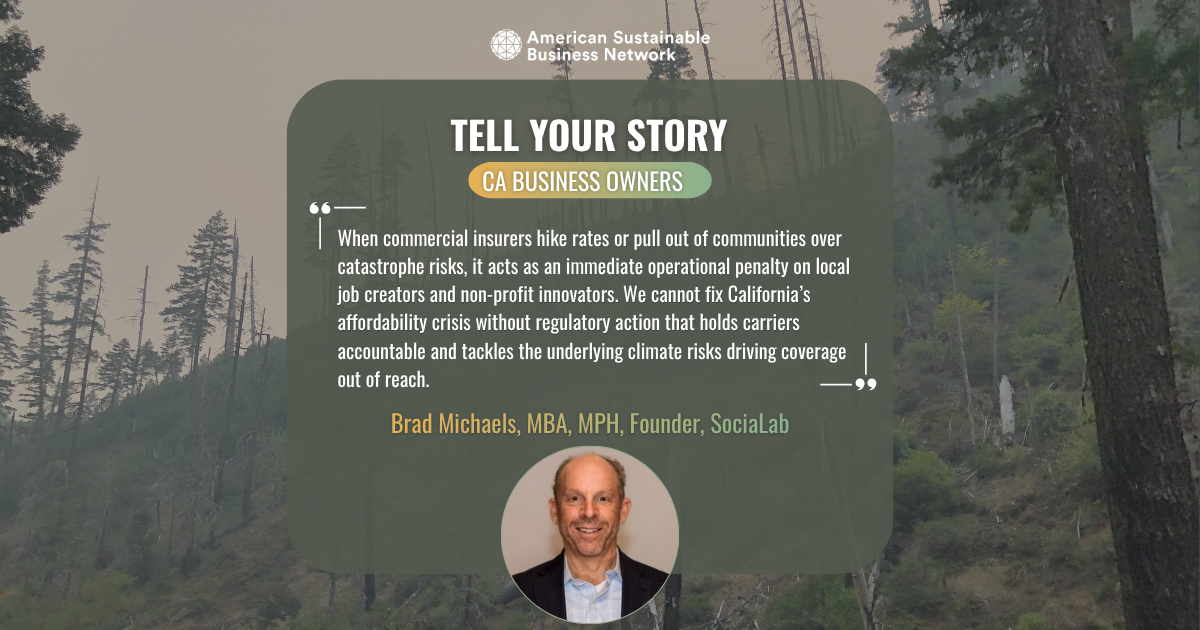
To safeguard economic resilience and the health of local economies, there is broad advocacy for shifting the industry standard around three core pillars, based on the A.C.T Framework:
1. Affordability
Sudden double- or triple-digit premium spikes directly cannibalize operating margins, forcing companies to halt hiring, restrict inventory, or close down entirely. Stabilizing rates is essential to protect the local tax base and keep residential communities affordable for workers.
2. Climate Risk Reduction
The current carrier response relies on reactive rate hikes or outright market exits, leaving real-world assets exposed to catastrophe. Instead of merely pricing and transferring risk, the system must prioritize proactive hazard reduction. Crucially, businesses that invest substantial capital to harden properties and mitigate fire risks must be rewarded with proportional premium reductions.
3. Transparency & Accountability
Insurers frequently price risk using proprietary, “black-box” catastrophe models and secretive risk scores that prevent property owners from understanding or contesting their assessments. Restoring public trust requires open, transparent pricing methodologies that business owners can actually audit and plan around.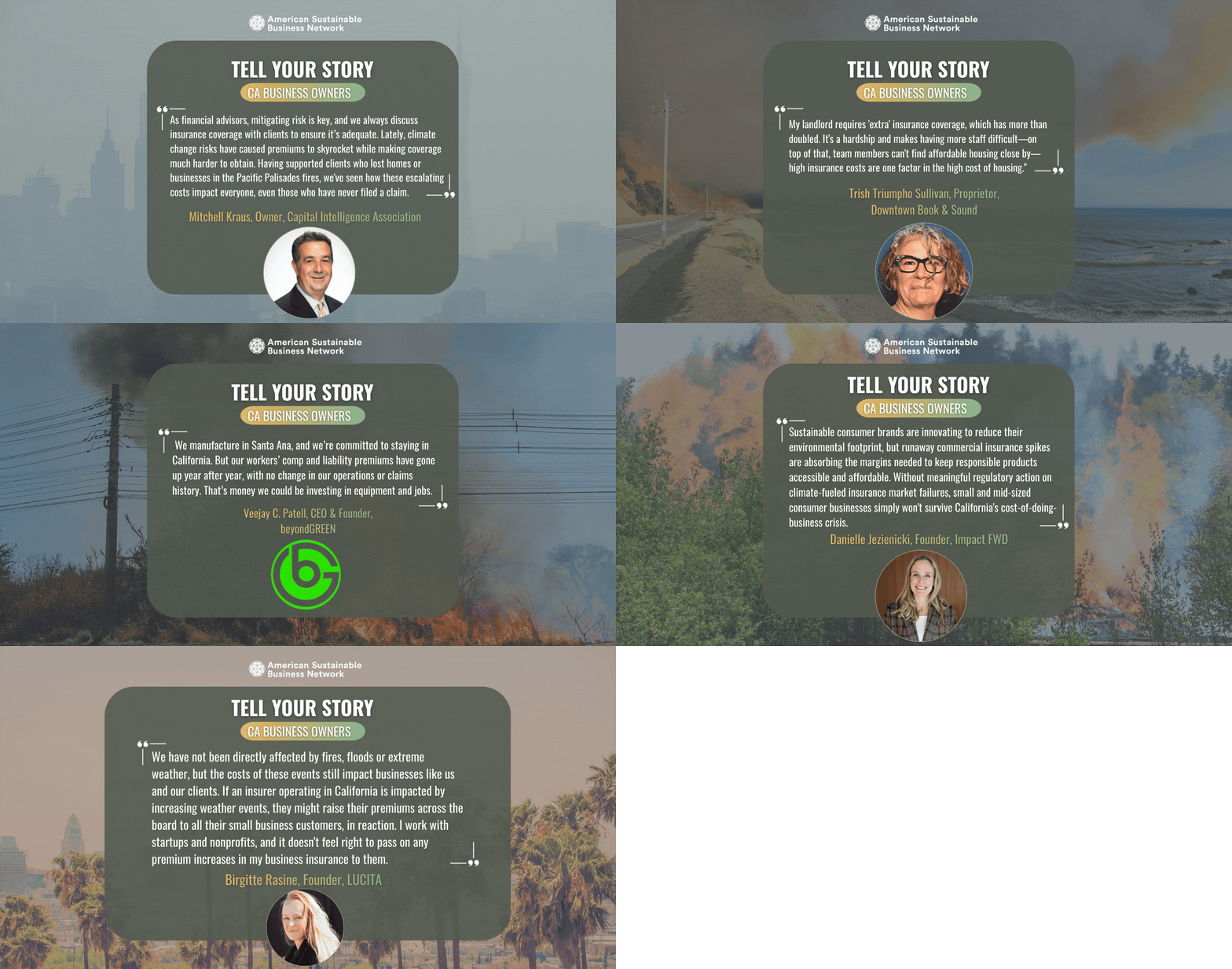
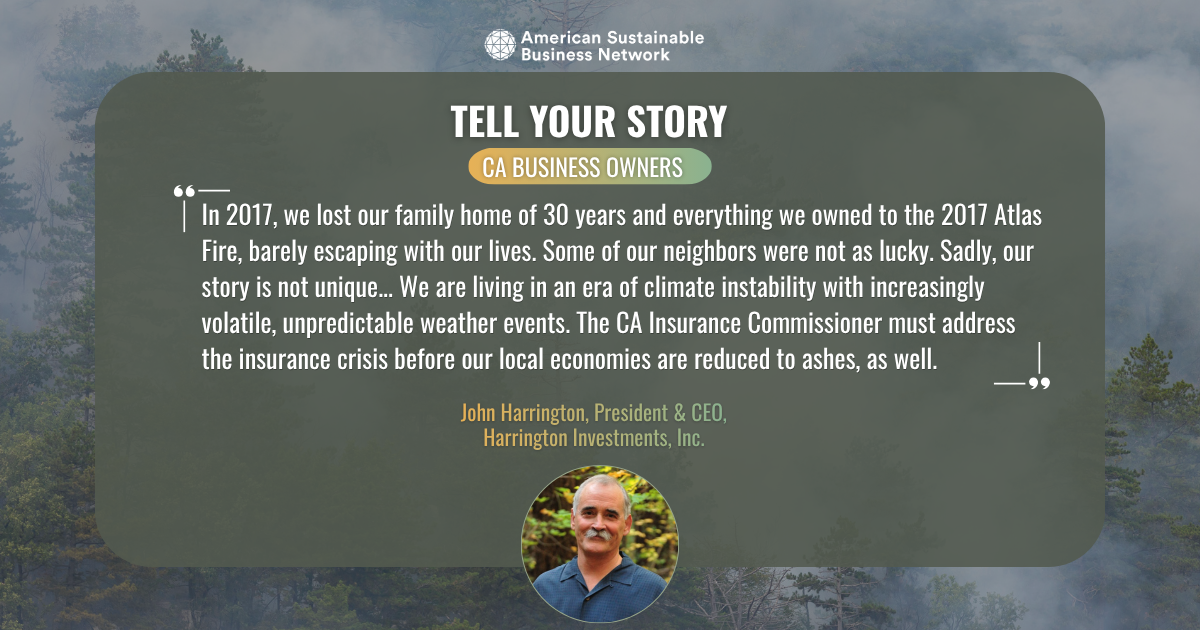
Lawmakers often hear from insurance carriers and actuarial lobbyists, but the most persuasive evidence comes directly from the businesses keeping the real economy moving. We’ve heard from so many diverse businesses to date. Here’s what they are saying about the changes needed and their calls for solutions: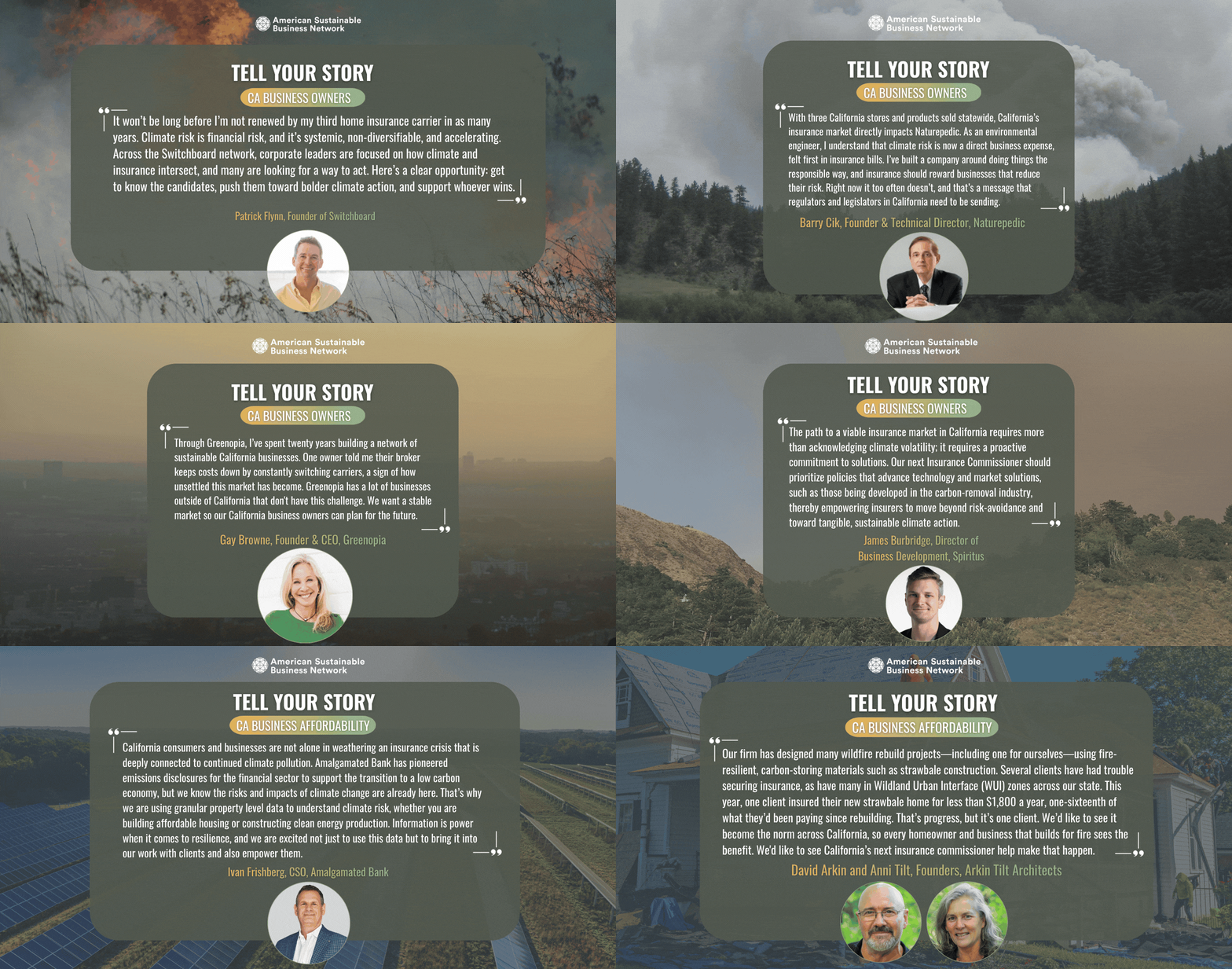
Business leaders across industries in California can push for systemic reform through three concrete actions:
- Tell Your Story: Submit your story of premium spikes, abrupt non-renewals, or delayed capital investments to ASBN. Real operational data provides the foundation for legislative advocacy and media testimony. Whether you offer a quote, media interview or video, we’re here to help you share your valuable perspective.
- Advocate for Public Modeling and Co-Investment: Back legislation that establishes transparent, public catastrophe modeling tools and requires insurers to discount coverage for certified property mitigation measures.
- Educate Your Network: Introduce the A.C.T. Framework to regional chambers of commerce, merchant associations, and industry roundtables. Engage directly in Insurance Commissioner hearings and public rate-filing reviews to demand transparency in risk modeling.
When insurance fails, business fails. Rebuilding a stable, predictable commercial insurance market in California is an economic necessity.